Tag: 18 Federal Bills Could End Anonymous Internet Forever

Kids Act Will End Internet Anonymity & Privacy
Legislation called the “Kids Act’ is more Republican BIG GOVERNMENT taking away your freedom requiring age & identity verification, track web history, end of online anonymity and end internet Privacy
A massive new package of legislation, dubbed the “Kids Act,” is moving through Congress with unprecedented speed. The package is a broad-based censorship and surveillance scheme that will affect every single American.
In this episode of Free Speech Friday, I sit down with Adam Thierer, a senior fellow at the Foundation for Individual Rights and Expression (FIRE), to break down the terrifying reality of what’s happening in Washington D.C. right now. Adam, who has been fighting for internet freedom since the 1990s, explains how these laws demand mass age verification (which applies to adults too), regulate design features like infinite scroll, and even target messaging apps and VPNs.
We also dive into the 1,800 AI bills popping up across states, Bernie Sanders’ misguided plans for AI, and why the government is moving to create an identity layer for the entire internet. We also discuss the toxic brew of “moral panic,” fake anti-big tech sentiment, and censorship that is driving this legislation forward.
Topics covered:
What the Kids Act is and how it passed committee
Mass age verification and the internet ID layer
The end of online anonymity
Why messaging apps and video games are targets
State laws controlling the national internet
State AI preemption and Bernie Sanders’ AI plans
The history of internet censorship from 1996 to today
AOC Calls Out Age Verification
The KIDS Act is Garbage
Congress just advanced a massive internet bill called the KIDS Act, that would destroy the internet as we know it.
Congress is aggressively pushing a massive package of internet “safety” bills, including the Kids Act, the Kids Online Safety Act (KOSA), the Screen Act, and COPPA 2.0. While lawmakers claim these bills are designed to protect children, the reality is that they are incredibly dangerous pieces of legislation that threaten to age-gate, censor, and heavily surveil the internet.
In a recent hearing, Representative Alexandria Ocasio-Cortez correctly pointed out that “child safety” is being used as a smokescreen for a national surveillance program that big tech lobbyists want. However, she also fed into a dangerous moral panic by falsely comparing social media use to big tobacco and the opioid crisis. The truth is, there is no scientific evidence proving that social media is an illicit, addictive substance causing widespread harm or cognitive decline.
This is all about amassing corporate power and pushing identity verification. Any form of age verification is inherently identity verification, meaning platforms like Discord and Meta will have to scan the faces and IDs of adults and teenagers alike. Instead of censoring online speech and creating privacy nightmares, we need real data privacy reform.
18 Federal Bills Could End Anonymous Internet Forever
COORDINATED ATTACK: FTC Announces END OF INTERNET ANONYMITY
The Kids Online “Safety” Act Will Be A Privacy Nightmare
Why the New House “KIDS Act” Benefits Big Tech, NOT Children
A virtual Legislative Briefing on the legal dangers of newly released Kids Internet and Digital Safety Act (KIDS Act, HR. 7757), which purports to protect children while mainly insulating Big Tech from responsibility: Why the New House “KIDS Act” Benefits Big Tech, NOT Children: A Legal Assessment
KIDS Act is Dangerous for Kids
The KIDS Act poses a threat to the safety of kids online. Haley McNamara (Executive Director at NCOSE) and Dani Pinter (Director of the NCOSE Law Center) discuss the reasons that this legislation has been so suddenly fast-tracked and supported by Big Tech. The language in this bill might sound good at a quick glance, but a closer scrutiny of the wording by our team of experts reveals a much darker reality.
Age Verification Is Ending Anonymous Browsing (What You Can Do)
The UK just implemented mandatory identification requirements for internet access, and other countries are watching closely to copy this playbook. What started as “age verification” has become a system that eliminates anonymous browsing and creates a permanent record of your online activity. I’ll break down exactly how this works, why it’s spreading globally, and what this means for anyone who values privacy online. Techlore empowers individuals with practical digital privacy knowledge, security tools, and advocacy resources. Discover how to protect your online data and regain control of your digital identity.
The Kids Act could be the End of Internet Privacy!
Age Verification Bills Are Unconstitutional
Courts around the country have confirmed that it is nearly impossible to impose online age-verification requirements on social media platforms, general purpose websites, or app stores without violating internet users’ First Amendment rights. Courts are blocking different iterations of these so-…
Per the above article: Age Verification Bills Are Unconstitutional
“Courts around the country have confirmed that it is nearly impossible to impose online age-verification requirements on social media platforms, general purpose websites, or app stores without violating internet users’ First Amendment rights. Courts are blocking different iterations of these so-called “child safety” proposals enacted by states.
Laws that lock such broad swathes of online content behind age gates can almost never withstand First Amendment scrutiny because they violate all internet users’ rights to access information, impinge on people’s right to anonymity, and exacerbate their data and security risks. Though the Supreme Court’s 2025 decision in Free Speech Coalition v. Paxton wrongly weakened First Amendment protections for adults’ access to online speech, it did not end the legal debate over age-verification mandates. Instead, it’s a limited ruling: its reasoning applies only to age restrictions on sexual material that minors have no constitutional right to access. We will continue to fight for all internet users’ rights to speak and receive information online, and courts will rightly continue to strike down age-gating laws that apply to protected speech more broadly—as they’ve done for decades.
Age Verification Bills Censor Protected and Important Online Speech
Courts have repeatedly rejected lawmakers’ justification that these laws are necessary to protect young people from “harmful” content online. Courts have ruled that social media platforms contain “vast quantities of constitutionally protected speech, even as to minors.” States have not been able to provide the courts with conclusive evidence that establishes a “clear, causal relationship between minors’ social media use and negative mental health impacts.” And courts have confirmed that minors have substantial First Amendment rights to speak online and access others’ online speech.
In truth, the science is inconclusive, and there is no way to guarantee that minors will not encounter content that could affect their mental health without censoring most of the internet—including resources that could help minors deal with the very harms these bills claim to address.
Age Verification Is A “Breathtakingly Blunt” Instrument for Reducing Online Harm
Despite legislators’ focus on youth, age verification exposes everyone who visits these websites to privacy and security harms, and stifles their access to protected content. Courts have found that “the governmental interest in protecting children does not justify an unnecessarily broad suppression of speech addressed to adults,” except in the limited context recognized in Paxton: age restrictions on sexual material that minors’ have to no First Amendment right to access in the first place.
Courts have also held that states cannot needlessly infringe on protected speech when plenty of alternative resources already exist to help parents regulate the content that kids can access. As the Supreme Court has put it: “Such laws do not enforce parental authority over children’s speech”—they unconstitutionally replace parents’ rights with state authority”.
ACLU Urges Congress to Vote Against Online Censorship Proposed in the KIDS Act | American Civil Liberties Union
The KIDS Act, which contains provisions previously found in the Kids Online Safety Act (KOSA), could silence online speech and jeopardize user privacy
ACLU Urges Congress to Vote Against Online Censorship Proposed in the KIDS Act
Per the above article: “The KIDS Act, which contains provisions previously found in the Kids Online Safety Act (KOSA), could silence online speech and jeopardize user privacy
The American Civil Liberties Union sent a letter today urging the House of Representatives to vote against the Kids Internet and Digital Safety Act (KIDS Act) which threatens the freedom of speech online. The legislation, which is set for a House floor vote on Monday evening, would incentivize platforms to remove online content that the government may deem “inappropriate” for minors.
The KIDS Act includes a version of the Kids Online Safety Act (KOSA), which the ACLU has repeatedly opposed because it would undermine the First Amendment rights and privacy of all online users. It would incentivize platforms to verify the ages of their users, requiring the collection of significant amounts of personal information. Adults who are unable to verify their ages might not be able to access those platforms at all.
“Censorship and invasive age verification measures will not keep children safe,” said Jenna Leventoff, senior policy counsel with the ACLU. “The KIDS Act would threaten free speech for people of all ages and it would put our data at risk. Congress should vote no on this well-meaning but misguided bill.”
The bill requires apps and websites to take unspecified action to prevent enumerated harms to kids, and in doing so, could lead to the removal of any information even tangentially related to those harms. This could include information that is actually helpful to minors, including information about addiction recovery, mental health resources, and gender affirming care. The proposed expansion of age verification tools would also increase the susceptibility of users’ personal information to data breaches. The letter can be viewed here.”
EFF to Gov. Pritzker: Veto Illinois’ HB 5511
The Illinois legislature recently passed House Bill 5511, which imposes a sweeping, device-level age-gating framework across nearly all internet-enabled hardware, operating systems, and online services. H.B. 5511 is a massive privacy and free speech nightmare. That’s why we sent a letter to formally urge Governor J.B. Pritzker to veto the bill.
EFF to Gov. Pritzker: Veto Illinois’ HB 5511
Per the above article: “The Illinois legislature recently passed House Bill 5511, which imposes a sweeping, device-level age-gating framework across nearly all internet-enabled hardware, operating systems, and online services. This well-intentioned but deeply flawed piece of legislation will harm young people who rely on the internet to access essential information and find community. That’s why we’re urging the Illinois governor to veto the measure.
Under this new regime, digital platforms are forced to collect and share users’ ages to platforms and websites. It also strips away basic, everyday features like personalized content feeds and overnight notifications for young people unless they can secure “verifiable parental consent.”
Much of H.B. 5511 is modeled after controversial legislation passed in California (A.B. 1043) and New York’s Stop Addictive Feeds Exploitation (SAFE) for Kids Act, both of which have already drawn immense blowback from open-source communities, privacy advocates, and tech stakeholders. For Illinois to copy this suspect age-bracketing regime before either law has even gone into effect, been tested in court, or proven functional is premature, economically risky, and legally wasteful.
H.B. 5511 is a massive privacy and free speech nightmare. That’s why we sent a letter to formally urge Governor J.B. Pritzker to veto the bill. Far from protecting children, the bill will effectively dismantle online anonymity, jeopardize data security, and severely restrict access to constitutionally protected speech for young people and adults alike. Finally, these schemes cut off vital lifelines for vulnerable youth in non-traditional families and pose an existential threat to the open-source ecosystem that underpins the modern internet.
For a deeper look at the constitutional, policy, and technological concerns with H.B. 5511, you can read our full letter here.”
Privacy Advocates Raise Alarm Over Online Age Verification Provisions as House Passes KIDS Act | Common Dreams
Opponents of the KIDS Act are sounding the alarm on Big Tech’s exploitation of kids online. Will lawmakers prioritize children’s safety over corporate profits? The bill’s flaws could have dangerous consequences for all users.
Per the above article: Privacy Advocates Raise Alarm Over Online Age Verification Provisions as House Passes KIDS Act “Age verification requirements will help the Trump administration carry out its vendetta against the press by creating new avenues to identify journalists’ confidential sources,” warned two press freedom advocates.
Opponents of a bill that is purported to protect children online said Monday night, after the legislation passed in the US House, that laws are “urgently” needed to stop Big Tech companies from preying on kids’ vulnerabilities.
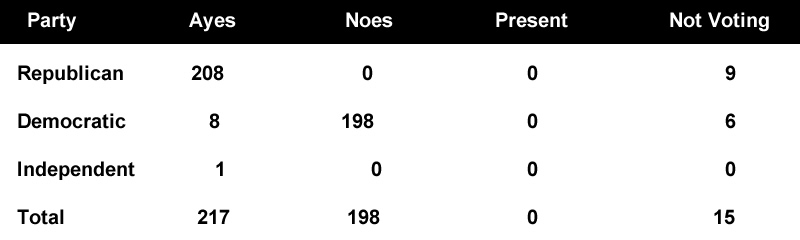
“The KIDS Act is not that piece of legislation,” said Rep. Pramila Jayapal (D-Wash.), who was one of 117 lawmakers who voted against the Kids Internet and Digital Safety (KIDS) Act, which passed with 267 votes, while 47 members of Congress did not vote.
The bipartisan bill requires online platforms to use new safety features and parental controls, restricts the use of minors’ personal data to target ads, and establishes new restrictions for AI chatbots and online games.
But ahead of the bill’s passage, the Electronic Frontier Foundation (EFF) was among the opponents raising alarm about other provisions “buried inside the KIDS Act” that would “push online services to verify all users’ ages, require government-directed moderation policies for online speech, and even create new rules about private and encrypted communications.”
The legislation, drawing from portions of 14 different online safety bills, “is a mess, with different age-gating schemes for different services, using different standards,” wrote EFF senior policy analyst Joe Mullin. “It’s a lot of complexity, and a lot of legal risk. Faced with that, many companies will conclude that the safest option is restrictive age-checking practices across their entire platforms.”
As Mullin explained: Throughout the KOSA section of the legislation, special protections, controls, messaging settings, and parental tools are required whenever a website or app “knows or should have known” a user is a child (defined in the bill as anyone under 13) or a teen (defined as anyone between 13 and 16 years old).
The problem is a website operator doesn’t need actual knowledge that a user is a minor to get in legal trouble. It applies when a platform “knows or should have known” a user’s age—a low, negligence-style standard of knowledge. If an online service gets it wrong, it’s going to be up to courts and regulators to decide, after the fact, if an online service “should” have known a user was 16.
To try to avoid liability, services will have to determine which users are teenagers and which are not. Most won’t be able to simply trust their users. They’ll have to collect more information about age, before any lawsuit or government action arises. Some companies may respond by requesting driver’s licenses or passports. Others will rely on age-estimation systems that attempt to guess users’ ages by looking at existing activity or doing facial scans.
At The Intercept, Caitlin Vogus of the Freedom of the Press Foundation and Aliya Bhatia of the Center for Democracy and Technology’s Free Expression Project warned ahead of the bill’s passage that while the legislation is ostensibly meant to protect children, the age verification requirement could impact all users’ ability to access social media platforms without revealing their identities—chilling anonymous speech and threatening would-be whistleblowers.
“Threats to online anonymity harm everyone, but one group is often overlooked: journalists and the sources who talk to them,” wrote Vogus and Bhatia. “Age verification requirements will help the Trump administration carry out its vendetta against the press by creating new avenues to identify journalists’ confidential sources.”
While the KIDS Act says it won’t require online platforms to collect government IDs for age verification, they said, “at least some platforms will likely choose this route to comply with the law or offer it as a fallback approach when other methods inevitably fail.”
Former Republican congressman Justin Amash, a libertarian, accused the lawmakers who voted “yes” on the legislation of betraying “the Constitution and the American people.”
Justin Amash on X (formerly Twitter): “Our government is run by people who are malevolent, totally clueless, or both.No rational person who understands what they’re doing wants this.They’re bragging about a backdoor digital ID and monitoring both kids and adults online! https://t.co/pJHeJjscRf / X”
Our government is run by people who are malevolent, totally clueless, or both.No rational person who understands what they’re doing wants this.They’re bragging about a backdoor digital ID and monitoring both kids and adults online! https://t.co/pJHeJjscRf
Other opponents of the legislation, including Jayapal, argued that the bill would allow tech companies to continue targeting children with algorithms that send harmful content to the youngest users.
The legislation omits a “duty of care” provision that was included in the Kids Online Safety Act (KOSA), which was passed by the US Senate in 2024—a requirement that tech firms “exercise reasonable care” to prevent harms to children.
Jayapal noted that the bill, which faces an uphill battle in the Senate, leaves “suicide, depression, addiction, substance use disorders, and eating disorders from the list of harms” that tech companies like Meta must address in their algorithms.
The “duty of care” provision has been criticized as too vague by several digital rights groups, while some child safety groups said its omission in the KIDS Act would “let Big Tech off the hook.”
“We have seen time and again that these corporations cannot be trusted to put children’s safety over their own profit margins,” said Jayapal. “We cannot keep exposing our kids to platforms that are either completely indifferent to their safety or a direct threat to it.”
The KIDS Act, Jayapal said, also includes provisions “that do not do enough to actually address the harms of” artificial intelligence.
“I voted no,” said Jayapal, “because we have a real opportunity to pass bipartisan legislation that holds these companies to not just be transparent about the harms and mitigate them, but to actually prevent them.”
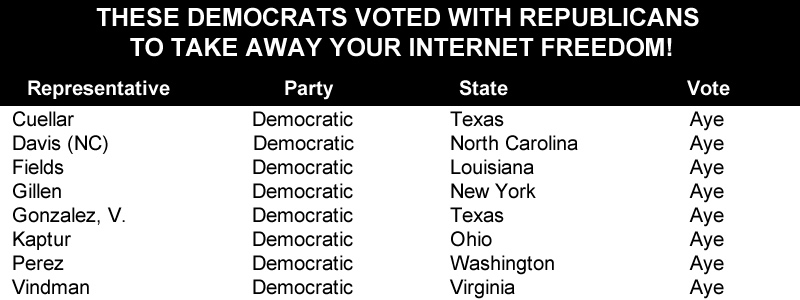
Roll Call 184 Roll Call 184, Bill Number: H. R. 2616, 119th Congress, 2nd Session
VOTE QUESTION: On Passage, DESCRIPTION: PROTECT Kids Act, VOTE TYPE: Recorded Vote, STATUS: Passed